
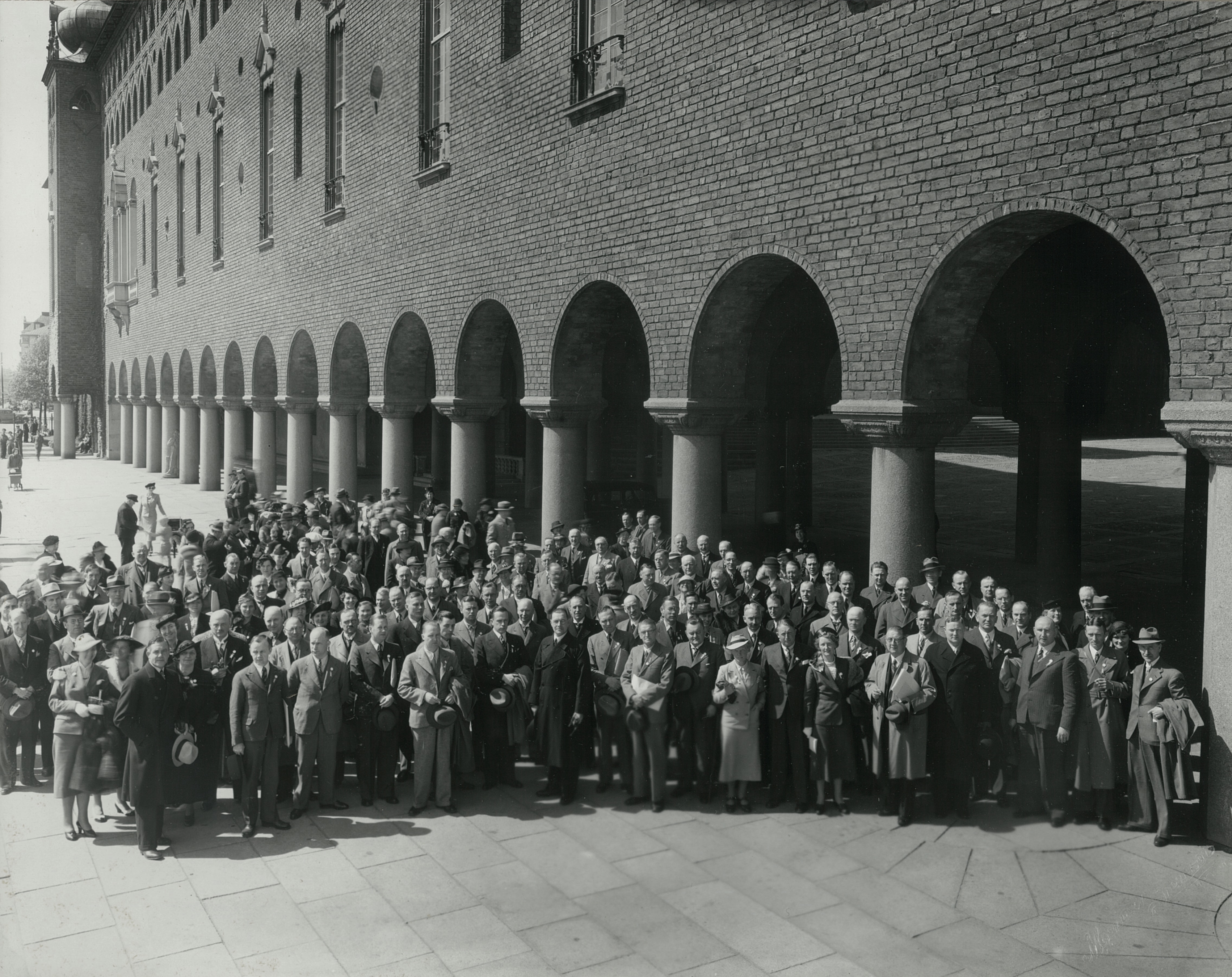
Photo: “The Norwegian National Museum of Justice”. The author has been given the permission to use the picture in the blog post.
This blog is based on ongoing research.
From the European perspective, the mid-1920s to mid-1930s was a period of progress in international police collaboration. The political tensions of the era were passed by emphasizing the idea of apolitical cooperation to fight ordinary crime. This enabled cooperation between the democratic and the authoritarian regimes of the time. Collaboration was seen as a professional and practical matter. Still the networks were not saved from political developments and aggression. Germany took over Interpol in 1938 following annexation of Austria, and the outbreak of World War II halted cooperation for many states. However, Sweden and Finland for example, continued their involvement with the organization.
During the war, the need for direct cooperation between foreign criminal police diminished. The war also hindered the larger meetings of police officers and overall cooperation between the states. In Finland, records of information exchanged with foreign police show a significant decline beginning in 1940. During the so-called Continuation War (1941–1944), when Finland was allied with Germany, only a handful of such cases were recorded.
Still, a considerable degree of continuity remained in international police relations, which were based on pre-war common practices, and perhaps more importantly on the personal connections created before the war. In the Finnish police, Nordic police networks had emerged as the most significant forum of collaboration in practice and in spirit. In 1920’s and 1930’s police officers had developed close ties with their counterparts in other Nordic countries, particularly with Sweden, which in many ways remained during the war. This connection with Sweden became the most important channel of support and solidarity between police colleagues and remained strong even as the practical police work diminished and became more restricted.
The relationship between the Finnish and Swedish police’s top brass remained close even during the years 1941–1944.
This was highlighted by the comparatively less active connections with Germany concerning ordinary police matters. Although Finland maintained contact with the Interpol and had ties to Nazi police, the available sources suggest that these connections were not very close or personal. On the surface, the relationship to Germans appeared unchanged and practical, but in many ways, it seems that talking about Germany and its politics were avoided. These were not mentioned in personal letters and Germany largely disappeared from the police’s public sphere after 1941. It even seems that the Finnish police did not have as close ties to German criminal police and the Interpol that the Swedish police had.
In this blog only few observations could be pointed out. The idea of the text is to give an idea of the outlines of ongoing research. At the same time, one could point out the importance of the personal relations of the police and the continuity of the relations during extraordinary circumstances. The war was not a total break from the pre-war years, and as for the Finnish police, the Nordic connection created before the war was the most important connection abroad. For Finland the Nordics were the closest, most familiar, best understood and relatable countries. This was also seen after the war as the Nordic police cooperation rose to represent a unique and successful example of regional collaboration in the realm of transnational policing.
About the author
Juho Pitkänen is a doctoral researcher at the University of Turku, Finland. He is currently researching the history of the police and the international police cooperation of the Finnish police during 1930-1945.
Contact e-mail: jjjpit@utu.fi
https://orcid.org/0000-0001-6092-414X
