
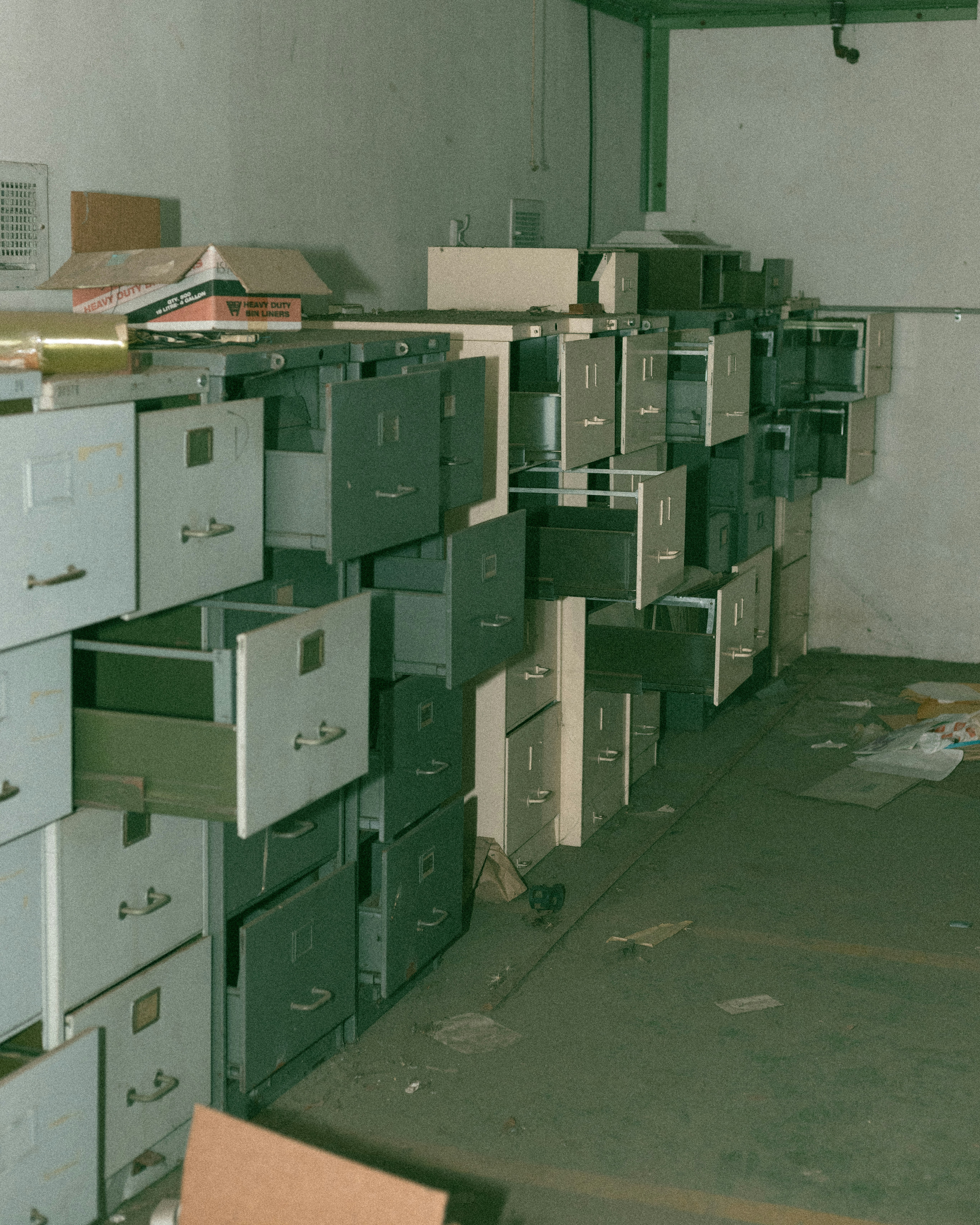
Photo by Jack Krzysik on Unsplash
In the 1920s, Finland was a young republic seeking to develop its police in line with modern Western policing. One aspect of this reform involved use of forensic science. Minister of the Interior Gustaf Ignatius, who was involved in the police reform effort, undertook study trips to the Nordic countries and Germany to study policing practices abroad. During one of these trips, he met Sigurd Tage-Jensen, the Copenhagen Chief of Police, who specialized in forensics. Ignatius asked Tage-Jensen to teach Finnish police officers the methods of forensic science, Tage-Jensen agreed. As a result, the first crime investigation course was held in Helsinki in March 1926, where senior Finnish police officers and detectives studied under Tage-Jensen, learning techniques of technical crime scene investigation such as the recovery of fingerprints and footprints.

After the course, Tage-Jensen remained in Finland to assist the Ministry of the Interior in establishing a national organization that would analyze physical evidence collected from crime scenes and oversee the registration and examination of fingerprints. On 29 March 1926, the Ministry of the Interior issued a decree that would permanently transform Finnish criminal investigation. The Ministry decided to establish a national Bureau for Criminal Investigation (Rikostutkimuskeskus) in Helsinki, tasked with supporting the work of the Finnish police. Although the Bureau began operations as a unit of only a few people, by the end of its existence it had grown into an expert organization of around twenty people.
The Bureau for Criminal Investigation quickly demonstrated the value of technical criminal investigation when many difficult cases were solved through forensics. Criminal investigation had previously been fragmented and inconsistent. Police officers across the country investigated crimes each in their own way, with little national coordination. The Bureau for Criminal Investigation played a role in systematizing police practice by holding courses on technical criminal investigation and advising officers through professional publications on how to conduct technical crime scene investigation correctly.
The Bureau initially comprised a fingerprint department, a technical criminal investigation laboratory, and a supply depot from which forensic equipment was distributed across the country. It also maintained contact with criminal investigation agencies in other countries. The Bureau examined important physical evidence, for example fingerprints, blood traces, break-in damage, handwriting, and firearms. When specialist knowledge within the Bureau proved insufficient for a particular task, external experts were brought in. Botanical analyses were a notable example of such externally conducted examinations.
Development did not stop at the moment of founding. In 1939, provincial crime police centers (Läänin rikospoliisikeskus) were established in the provinces, to assist local police in investigating serious crimes. The Bureau for Criminal Investigation played its own role in this process, as more officers needed to be trained in technical criminal investigation. During the war years, the Bureau continued to operate normally despite wartime conditions, as its forensic work was considered important to Finland’s national security. One example was the Bureau’s investigations of counterfeit wartime ration coupons, large quantities of which were circulating on the black market.
In the post-war years, the Bureau for Criminal Investigation continued to develop Finnish forensics until it was merged with the Uusimaa provincial crime police center in 1955 to form the National Bureau of Investigation (NBI, Keskusrikospoliisi). At that point, operational and technical police work were united into a single national police organization, tasked with handling the most complex and difficult criminal cases. Today, the legacy of the Bureau for Criminal Investigation lives on in the NBI, which is celebrating its centenary this year, as the NBI considers its own history to begin with the founding of the Bureau for Criminal Investigation.
The establishment of the Bureau for Criminal Investigation reflects the ethos of its era, that hard science could be used to overcome crime. Although crime could not be eradicated through science alone, forensics became an indispensable tool for the police. Were forensics to suddenly disappear from the police toolkit today, criminal investigation would face a catastrophic setback. It is therefore important within criminology to recognize the vital role that forensics plays in solving crimes, which also affects general deterrence. By tracing forensics back to its starting point in history, we can better understand the desire to develop the police from a paramilitary disciplinary organization into a professional expert organization, which is precisely what the modern Western European police force represents.
About the author

Marko Piipponen is a doctoral researcher at University of Eastern Finland doing research history of Bureau for Criminal Investigation. His research focuses on history of forensics, history of Finnish police, 20th century crime history and right-wing extremism.
Profile: University of Eastern Finland profile
Contact: marko.piipponen@uef.fi