
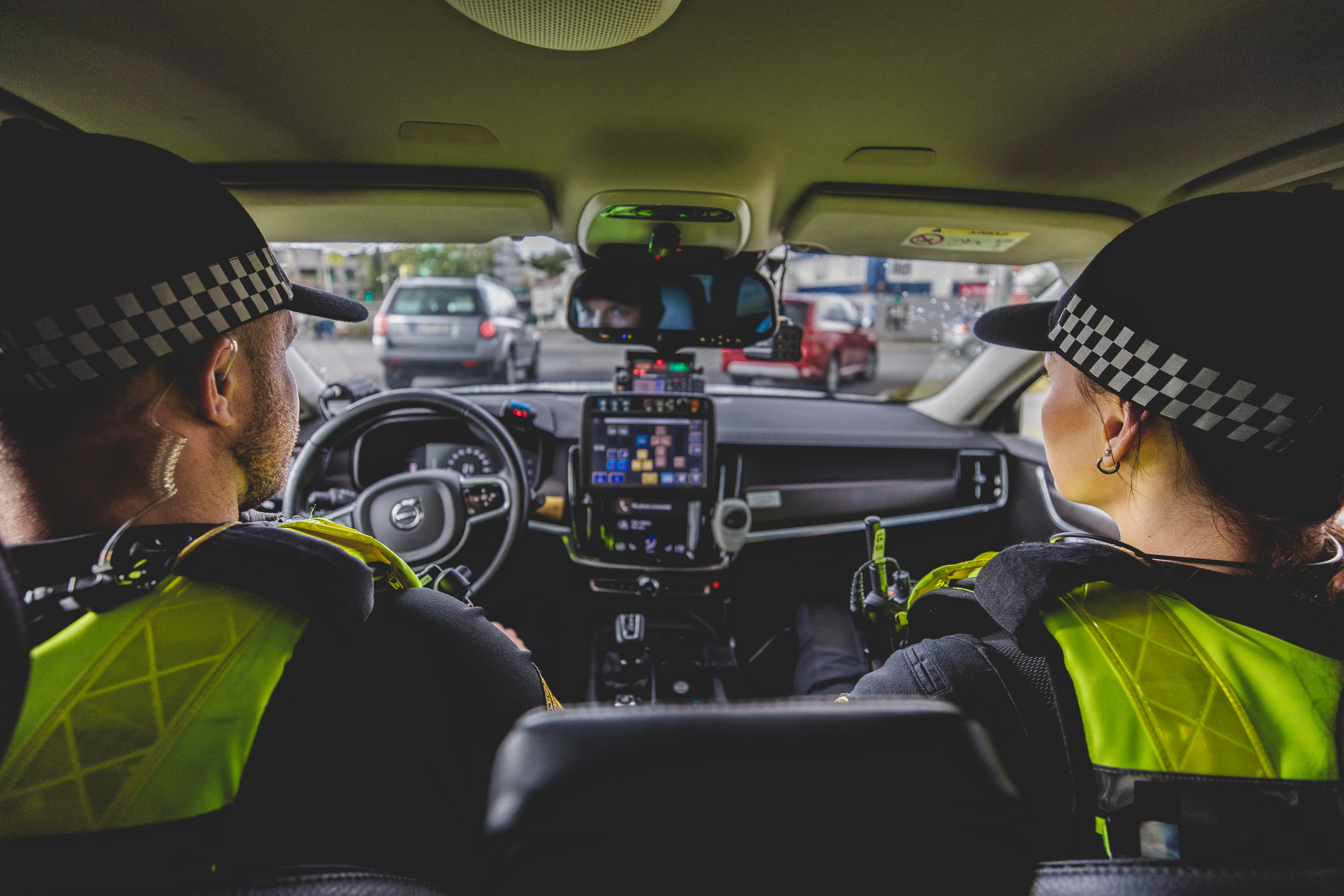
Across Europe, police education has undergone a significant transformation, where traditional vocational training programmes have increasingly replaced university-based programmes. This trend reflects broader efforts to professionalise the police through formal education, standardised qualifications, and the development of a specialised knowledge base.
Iceland offers a good example. In 2016, the Icelandic government closed the National Police Academy (NPA) and moved basic police education to the university level through a partnership between the University of Akureyri (UNAK) and the Centre for Police Training and Professional Development (PTPD).
Policy documents leading up to the reform explicitly linked this change to professionalisation, presenting university-level education as a response to increasingly complex policing tasks and as a means of validating police competence through recognised academic credentials. The reform introduced not only structural changes, including shifting to a blended learning model, but also pedagogical changes, including a clearer emphasis on critical reflection, communication, and the integration of academic knowledge and practice-based police knowledge.
Our recent study examines how this reform has reshaped the purposes and priorities of police education in Iceland. Drawing on policy documents, legislation, programme materials, and survey data from police students and active officers, we analysed the reform through educational theorist Gert Biesta’s framework of educational purposes: qualification, socialisation, and subjectification.
First, our findings suggest that university-based police education can widen, rather than narrow, officers’ competence profile. Contrary to concerns that academic knowledge displaces operational capability, both UNAK students and active officers placed high value on operational skills and on academic, relational, and reflective competences. Thus, the findings support emerging research suggesting that academisation need not undermine practice-based knowledge, but can instead broaden and deepen what counts as legitimate professional competence.
Second, our analysis shows that professionalisation is a multi-level process shaped across policy, educational, and occupational culture. The coherence observed between reform intentions, student valuations, and officer expectations indicates that professionalisation involves more than formal credentialing or institutional relocation. It is also a process through which states, educational institutions, and occupational actors participate in redefining legitimate knowledge, valued competence, and professional identity.
Third, the findings highlight that educational purposes matter for police professionalisation. Biesta’s framework helps show that professional formation depends not only on strengthening qualification, but also on socialisation into democratic and ethical norms and on the development of reflective judgment and responsibility. In Iceland, the reform appears to have strengthened qualification while also giving greater prominence to communicative, ethical, and reflective dimensions of police education. This suggests that professionalisation through higher education is not simply a matter of raising credential levels, but of rebalancing what professional education is for.
Overall, the Icelandic case points to a form of police professionalisation that extends beyond technical competence or the adoption of evidence-based methods alone. It suggests that higher education reforms can reconfigure educational purposes, legitimate knowledge, and professional authority in ways that support a broader, more reflective, and more democratically oriented model of policing.
About the authors

Ólafur Örn Bragason serves as director of the Centre for Police Training and Professional development at the National Police Commissioner of Iceland. He has worked for the Icelandic Police for 22 years and is also an assistant professor at the Institute of Police Science Research at the University of Akureyri. His background is in psychology, having specialised in Forensic Psychology.

Guðmundur Oddsson is a Professor of Sociology at the University of Akureyri, Iceland. His research focuses on social control, deviance, and class inequality, with particular attention to the subjective dimensions of class. His latest publication is The Power of Sociology: Grasping Our Unequal World (2026), co-authored with Jenny Stuber and James Thomas.
Photos: University of Akureyri