
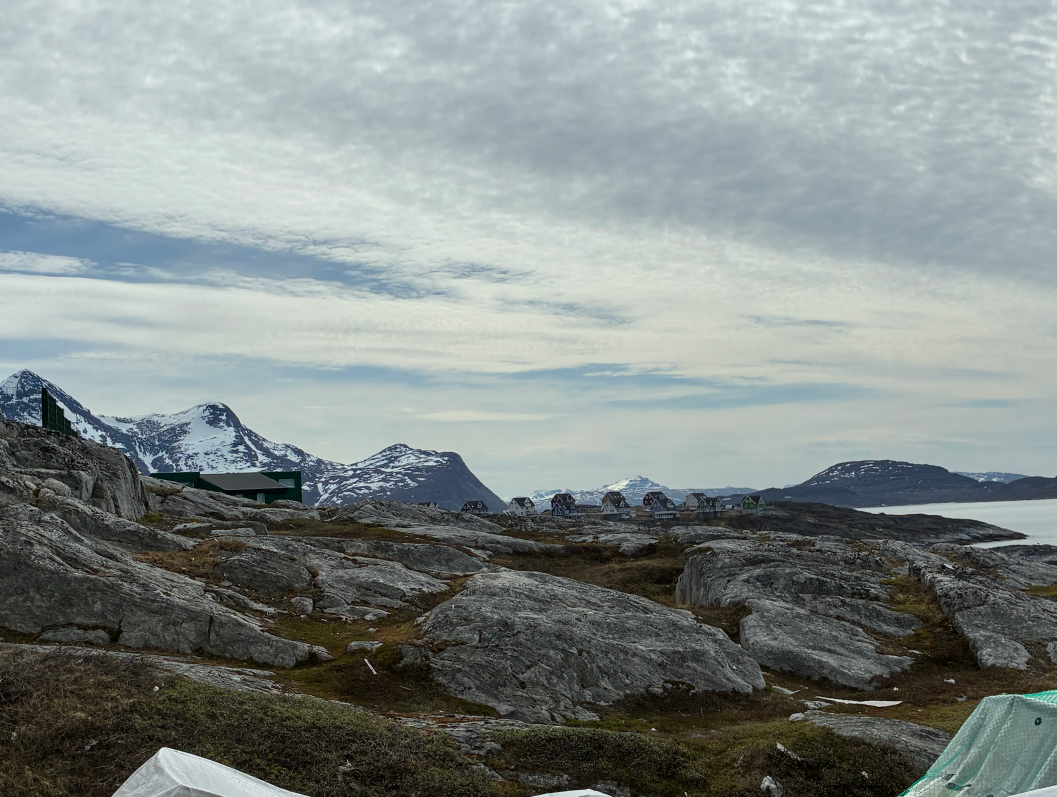
Photo: Private
Children, Crime and Social Support in a Nordic Context
In June 2026, I participated in the Nordic Criminal Law Workshop at Ilisimatusarfik, the University of Greenland in Nuuk, thanks to a travel grant from the Nordic Research Council for Criminology (NSfK). The workshop has a long tradition of bringing together criminal law scholars and criminologists from across the Nordic countries and provided an excellent setting for academic exchange and new collaborations.
The event was very well organised by Anette Storgaard and Søren Verdoner of Aarhus University, with invaluable support from staff at Ilisimatursafik. At the workshop we had the opportunity to meet newly graduated law students and discuss the legal profession in the Greenlandic context.
My particular research interest concerns police encounters with children under the age of 15 and the measures available through the Danish Youth Crime Board. Recently, I published an article examining how Danish police should approach children below the age of criminal responsibility, given that these children may now be subject to proceedings before the Youth Crime Board. The article explores whether such proceedings fall within the scope of Article 6 of the European Convention on Human Rights and, if so, whether protection against self-incrimination should apply (Juristen, no. 1/2026, p. 23-38).
The workshop offered a valuable opportunity to discuss these issues with Nordic colleagues and to learn how similar challenges are addressed across different jurisdictions.
Before the workshop, colleagues from Aalborg University and I visited the Nuuk Police Headquarters, where we learned about the work of the Greenland Police and the particular challenges associated with crimes committed by and against children. Our discussions highlighted the importance of cooperation between the police and social authorities.
We also met with the Chief Prosecutor of Greenland, who shared insights into ongoing efforts to strengthen prosecutorial capacity. These include ambitions to recruit more legally trained prosecutors and professionals with Greenlandic language skills.
Our conversation also highlighted several distinctive features of the Greenlandic context. A significant proportion of recorded crime involves offences against the person, and children are often affected, either as victims, offenders, or both. These discussions provided valuable perspectives on how legal and social responses must be adapted to specific circumstances.
The workshop itself offered many opportunities for networking and academic discussion. Questions concerning children and the criminal justice system are highly relevant across the Nordic countries. As some countries face challenges related to children being recruited by criminal gangs to commit serious offences, different policy responses are emerging, including proposals to lower the age of criminal responsibility in Sweden.
I am grateful to NSfK for making this visit possible. The workshop provided valuable opportunities to share knowledge, gain new perspectives, and establish collaborations on an important topic: how Nordic societies can best support children who find themselves at the intersection of punishment and care.
Author biography
Lene Wacher Lentz is Associate Professor at Aalborg University, Denmark. Her research focuses on criminal law, digital policing, and children’s encounters with the justice system. Contact: lwl@law.aau.dk. Profile: https://www.aau.dk/ (insert direct profile link).
